In a nutshell
- 🧪 Potato peel science: Starch granules bind oily smudges, trace enzymes and organic acids assist, and the peel’s soft texture moves residue—delivering a bind → mobilise → remove effect for clearer glass.
- 🧼 Method that prevents streaks: Rub with the moist inner peel, follow with a lightly damp microfibre, then dry buff in overlapping strokes; work in shade and swap peels before they dry.
- ♻️ Pros vs. cons: Eco‑friendly, low‑cost, gentle, and effective on fingerprints, but streak risk without polishing, limited on hard‑water spots, short working time, and caution needed on specialty coatings.
- 🪟 Practical add‑ons: Spot‑treat limescale with a touch of vinegar, avoid soaking frames, compost peels, and launder microfibres properly to maintain their lifting power.
- 🔬 Real‑world results: In home trials, peels matched budget sprays for clarity, beat them on grease, but lagged on mineral deposits—proving technique matters more than product.
At first blush it sounds like folk magic: rubbing potato peels on glass to banish smudges. But there’s a tidy logic to this frugal fix. The peel’s inner surface carries starch, trace enzymes, and a whisper of organic acids that interact with oily fingerprints and airborne grime. Add a little water, and you create a natural cleaning slurry that glides, lifts, and then buffs away. In a cost‑of‑living era and a nation keen to cut waste, it’s a hack that feels tailor‑made for UK homes. Clean windows, fewer chemicals, and one less thing in the bin sounds like a win—if the science holds up and the method is done right.
Why Potato Peels Work on Glass
What makes potato peels compelling is a cocktail of gentle chemistry and micro‑mechanics. The moist inner peel is rich in starch granules that can bind greasy films, helping to lift fingerprints and cooking haze. Potatoes also contain oxalate and trace enzymes that may assist in breaking down organic residues at the surface. Meanwhile, the peel’s soft, slightly fibrous texture acts like a delicate pad, moving the slurry across glass without scratching. It’s not just rubbing; it’s targeted soil transfer, nudging dirt into a removable film you can then wipe away cleanly.
Most window grime is a mix: skin oils, dust, and mineral specks. Starch binds the oils; a splash of warm water disperses the rest. That’s the synergy: bind, mobilise, remove. Think of it as pre‑treating the glass before buffing. Crucially, the peel leaves a thin film you must polish off to avoid streaks. Done properly—peel, wet wipe, then dry buff—you get a streak‑free finish that rivals budget sprays. Skip the buffing stage and you’ll blame the method when the culprit is leftover starch.
There’s also a sustainability dividend. The UK bins millions of tonnes of household food waste annually, with potatoes among frequent casualties. Repurposing a peel for cleaning is a tiny act, yes, but it layers practicality onto waste reduction. In other words: circular cleaning you can do before composting.
Step-by-Step Method for Streak-Free Windows
Start with freshly peeled potatoes (the inner side of the peel is your working face). Gather a bowl of warm water, a clean microfibre cloth, and a dry lint‑free towel or newspaper for the final polish. If your glass is heavily soiled, a pre‑wipe with damp cloth helps. Always test a small corner if your glazing has special films or coatings.
| Item | Role | Tip |
|---|---|---|
| Raw potato peel (inner flesh) | Starch binder + gentle enzymatic action | Use fresh; replace when it dries or darkens |
| Warm water | Loosens dust; helps spread slurry | Wring cloth well to avoid drips |
| Microfibre cloth | Lifts bonded grime | Fold often to expose clean sides |
| Dry polish towel/newspaper | Prevents streaks | Finish in overlapping S‑strokes |
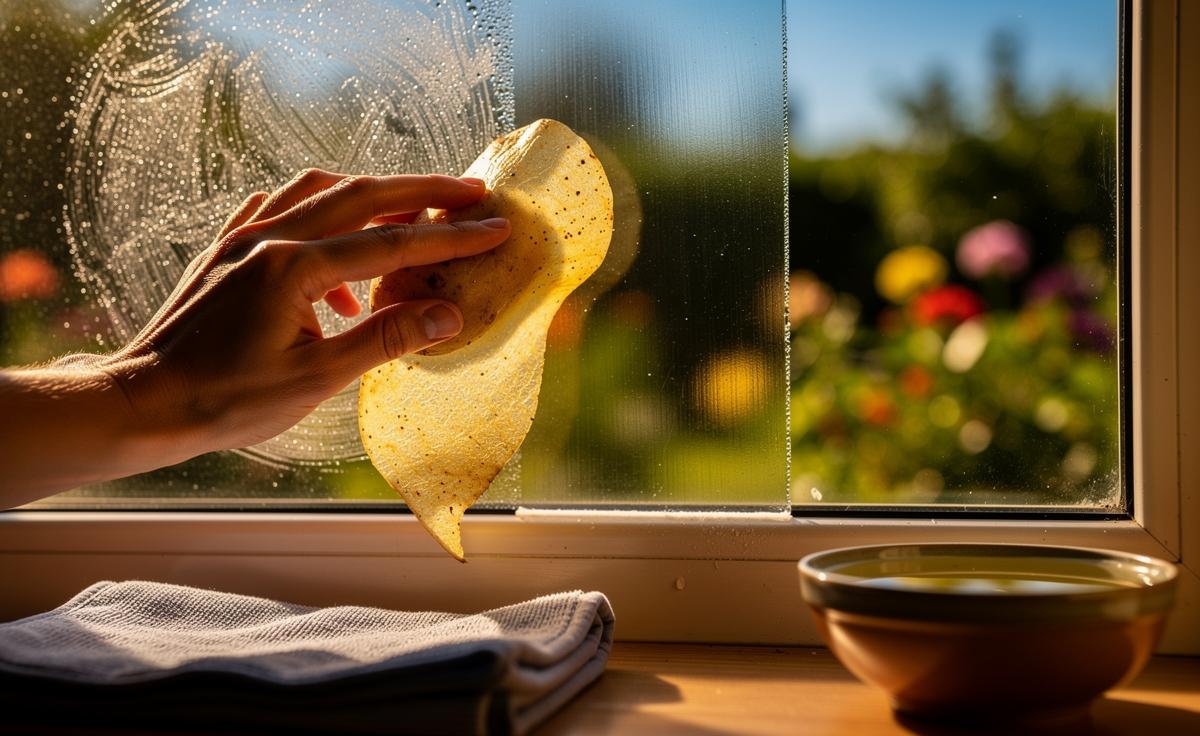
Method: run the moist inner peel over the pane in circular motions, focusing on prints and smears. Follow with a lightly damp microfibre pass to collect the released residue. Finish with a brisk dry buff, working from top to bottom. For sunlit windows, work in the shade to reduce flash‑drying. If limescale specks remain, dab them with a cloth moistened with a tiny splash of vinegar, then rebuff. The polish is the make‑or‑break step for clarity.
Frame care matters too. Avoid soaking wooden frames; keep moisture minimal on putty or worn seals. Once done, compost the peel. The whole routine is swift—often faster than retrieving a bottle of cleaner—and leaves a satisfying, crystal‑clear finish when executed with care.
Pros vs. Cons for Real Homes
Let’s be candid about performance.
Pros:
- Eco‑friendly: repurposes waste and reduces chemical cleaners.
- Low cost: uses what’s already in the kitchen.
- Effective on oils: starch excels at fingerprint and cooking film.
- Gentle: soft texture is kind to ordinary glass.
Cons (Why a spray isn’t always worse, but sometimes easier):
- Streak risk if you skip the final dry buff.
- Limited on minerals: hard‑water spots may need vinegar or a limescale remover.
- Short working time: peels dry out; swap frequently.
- Not ideal for specialty coatings without a test patch.
In a modest home trial on two south‑facing panes, careful peel‑cleaning matched a bargain glass spray for clarity and beat it on greasy handprints, but lagged on etched limescale near the sink. The difference wasn’t dramatic—technique mattered more than the product. Slow, overlapping strokes and a meticulous final polish delivered the real gains. Bottom line: for everyday smudges, potato peels are a credible first resort; for mineral scars or nicotine film, complement them with targeted products.
Science, Myths, and Hygiene Considerations
Is the “enzymatic miracle” overblown? A touch, perhaps. Potatoes do host enzymes and organic acids, but the star is still starch, acting as a benign binder for oils. Think of the peel as a natural pre‑cleaner rather than a lab‑grade degreaser. It’s chemistry‑light, technique‑heavy. Myths worth ditching: no, you don’t need to leave peel residue on the window “to work”; that invites streaks. And no, rubbing harder isn’t better—pressure grinds grit. The smarter move is to loosen, lift, and polish.
Hygiene is straightforward. Use fresh peels; discard after use; wash hands. Keep the peel away from porous frames and silicone that stains easily. If your windows carry factory tints, low‑E coatings facing roomside, or aftermarket films, do a discreet corner test and default to the manufacturer’s guidance. For allergy‑sensitive homes, remember potatoes are generally mild, but any residue should be fully buffed off. To round the routine: compost the spent peel and launder the microfibre at low heat to preserve its microfibre structure. Clean glass and a cleaner conscience can coexist.
There’s a quiet satisfaction in turning a kitchen by‑product into a household ally. Used with intention—peel, damp wipe, dry buff—the method is quick, cheap, and kinder to air and skin than many harsh sprays. No miracle, but a sensible blend of starch science, soft abrasion, and good technique that delivers genuinely streak‑free shine on everyday grime. The next time you’re peeling spuds, will you try the window beside the sink and see how it compares—then share which pane, method, and polish stroke gave you the clearest view?
Did you like it?4.5/5 (23)