In a nutshell
- 🔬 The science: scent travels the olfactory–limbic pathway, priming autonomic balance (parasympathetic vs. sympathetic) so aromas act as environmental behavioural cues that shape a home’s “energy”.
- 🗺️ The hack: create scent zones by room with one anchor aroma each; run short timed cycles (15–30 min), place diffusers near gentle airflow, and rotate seasonal palettes to keep cues crisp.
- ⚖️ Pros vs. Cons: Pros—fast mood-shifts, ritual-building, low cost-per-use; Cons—sensitivities, pet risks, overwhelm if overused; Mitigate with quality oils, ventilation, consent, and brief pulses.
- 🧭 Quick reference: match oils to tasks—bergamot/sweet orange (uplift), rosemary (clarity), lavender (soothe), eucalyptus (refresh), frankincense (ground)—and keep doses light with clear safety rules.
- 🏠 Case study: a London flat’s 7-day reset used bergamot–rosemary (AM), eucalyptus–lavender (PM), and cedarwood–frankincense (evening), plus airflow tweaks and “short pulses only,” yielding calmer routines and less doom-scrolling.
In homes churning with chores, screens, and the aftershock of commutes, the smallest interventions can do the heaviest lifting. One such micro-change is a simple diffuser hack: matching specific essential oil blends to the rhythms of your rooms and the times of day you actually use them. This is less about masking odours and more about steering energy—quieting it, brightening it, or grounding it—through scent. When aroma is placed with intention, it becomes a subtle but steady cue to the nervous system. Think of it as a domestic conductor’s baton, guiding tempo without shouting. Here’s how and why it works, and how to make it work for you.
The Science of Scent and Home Energy
We process smell directly through the olfactory-limbic pathway, a fast lane to memory, emotion, and autonomic regulation. That’s why a wisp of rosemary can sharpen focus while a whisper of lavender loosens shoulders. Scent doesn’t ask you to “try” to relax or focus; it primes the body before you’ve had time to argue. In the home, these micro-signals compound: a steady citrus in the kitchen can lift morning sluggishness, while a resinous base note in the hallway slows breath on the way to bed. Over time, the environment does some of the emotional labour for you.
Crucially, the “energy” of a space isn’t mystical; it’s the sum of airflow, acoustics, light, and behavioural cues. Fragrance slots into that matrix by nudging the parasympathetic (rest-digest) or sympathetic (alertness) balance. A practical rule of thumb: bright top notes (e.g., bergamot, sweet orange) help with activation, while woody or herbal base notes (e.g., cedarwood, frankincense, lavender) help with settling. Think “aroma ergonomics”: place scents where they support the task, not where the plug socket happens to be.
The Diffuser Hack: Zoning Your Home by Fragrance
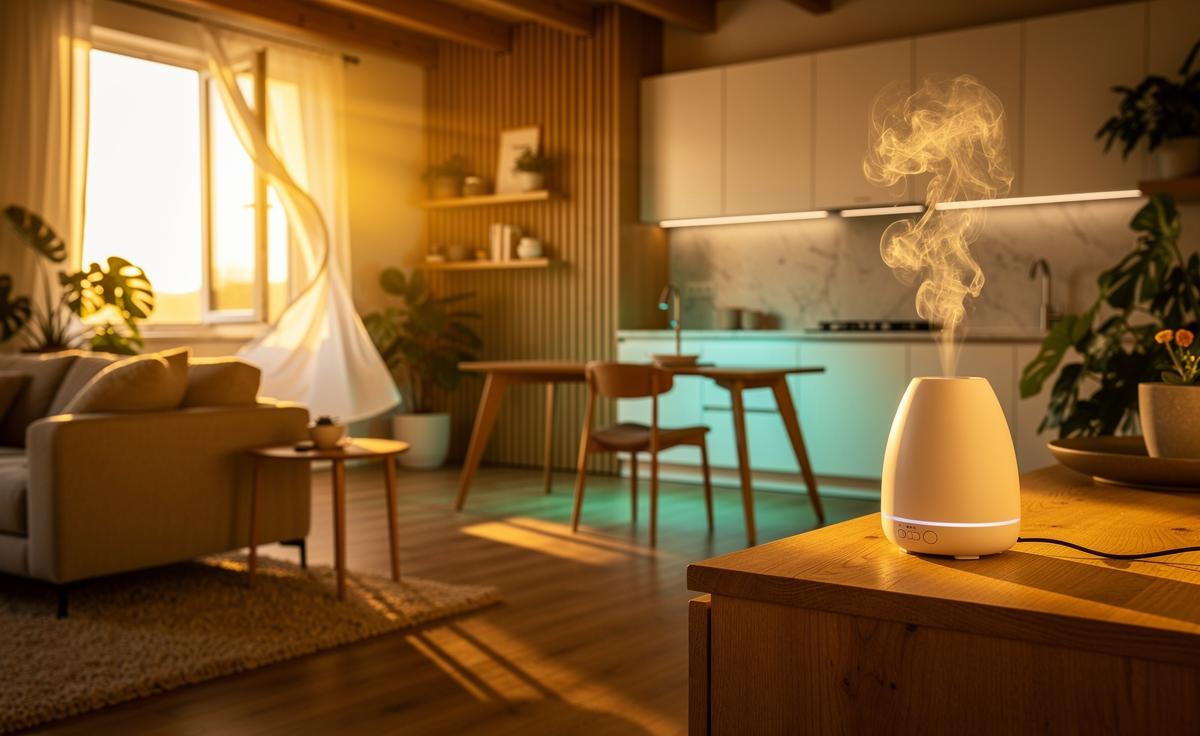
The hack is disarmingly simple: assign distinct scent zones to functional zones, and then schedule them to mirror your day. Start by choosing one “anchor” aroma per zone—a citrus-herb blend for the kitchen, a soft floral for bedrooms, a conifer-resin in the hallway or living room. Use an ultrasonic diffuser on a short cycle (15–30 minutes) at the times you naturally enter those spaces. Short pulses beat all-day clouds; they teach your brain to link space with intention. Over a week, the cues feel seamless, like background lighting you no longer notice yet depend on.
Placement matters. Put the diffuser near airflow (but not under a vent) so the scent gently migrates through doorways. Avoid scent clashes at thresholds by letting one zone fade before the next cue begins. If you share the home, agree a palette—two to four oils across the house—to avoid olfactory fatigue. With children, pets, or asthma in the household, keep concentrations low and ventilate well. And go seasonal: resin and spice in winter, green-herb and citrus in spring. Fragrance works best when it complements the light, temperature, and texture of the day you’re actually living.
- Morning: bergamot + rosemary in kitchen for bright, clear energy.
- Afternoon: eucalyptus-lavender in workspace for calm focus.
- Evening: cedarwood + frankincense in lounge for grounded rest.
Pros vs. Cons of Using Essential Oil Diffusers
Done thoughtfully, diffusion is a low-effort, high-impact way to shape domestic mood. Pros include a rapid onset of perceived calm or alertness, customisability by room and schedule, and a relatively low cost-per-use. There’s a ritual element too: switching on a timed cycle signals “we’re cooking now,” or “we’re winding down,” replacing nagging with ambience. The right scent in the right place reduces friction—less corralling, more cooperating—especially in busy households.
Yet there are cons to respect. Over-diffusing can irritate airways or pets; cheap oils may be adulterated; and heavy, continuous diffusion can feel oppressive. Not all noses agree—what calms one person might annoy another, so consent and moderation matter. If you’re pregnant, have respiratory conditions, or live with animals sensitive to fragrances (cats especially), take medical or veterinary advice and keep concentrations low. The smartest move is to treat scent as a cue, not a cover-up: ventilate first, clean second, diffuse third.
- Pros: fast mood-shift; scalable; ritual-building; room-by-room control.
- Cons: sensitivity risks; oil quality varies; can overwhelm if overused.
- Mitigations: short cycles; high-quality oils; open windows; clear house rules.
Quick Reference: Oils, Moods, and Safety
Choosing oils is easier with a simple matrix: match the primary effect to your task and apply a timing rule. Bright top notes for activation early in the day; complex bases for de-escalation later on. Blend sparingly—two oils create clarity, six create mud. For families, err on gentle oils (lavender, sweet orange) and keep doors open so aroma disperses. If you have pets, be mindful: cats metabolise certain compounds poorly, so keep diffusers out of their sleeping areas and use brief, ventilated cycles.
Below is a quick-look table to guide selection. Dose lightly: 3–5 drops in 100 ml water is enough for most small rooms. Rotate oils weekly to avoid nose-blindness and keep the cues “fresh” for the brain. And buy from reputable brands that provide GC/MS testing or transparent sourcing; purity affects both scent quality and safety.
| Oil | Primary Effect | When to Use | Safety Notes |
|---|---|---|---|
| Bergamot | Uplifting, anxiolytic feel | Morning kitchen or hallway | May be photosensitising on skin; diffusion generally fine |
| Sweet Orange | Brightening, friendly | Family spaces, playtime | Usually well tolerated; keep cycles short with pets |
| Lavender | Soothing, sleep-supportive | Evening bedroom/living room | Use lightly to avoid grogginess |
| Rosemary | Alertness, clarity | Work nook, study sessions | Avoid high concentrations if hypertensive |
| Eucalyptus | Fresh, opening | Midday reset, stuffy rooms | Not ideal around some pets; ventilate well |
| Frankincense | Grounding, reflective | Evening wind-down | Rich resin; use sparingly |
Case Study: A London Flat’s 7-Day Reset
In a compact two-bed in Walthamstow, a couple tested scent zoning for a week. They used a single ultrasonic diffuser and three blends: bergamot–rosemary (breakfast, 20 minutes), eucalyptus–lavender (post-lunch, 15 minutes), and cedarwood–frankincense (9 pm, 20 minutes). They opened windows for five minutes before each cycle. By day three, the hallway cue became a natural “slow down” signal on the way to bed. The couple reported less phone doom-scrolling after 9 pm and a tidier kitchen without extra nagging—ambient cues doing quiet work.
Two tweaks sealed the habit. First, they moved the diffuser to catch a gentle air current, improving spread without intensity. Second, they set a shared rule: no mid-cycle top-ups; stick to short pulses only. They also agreed a two-day “scent rest” on the weekend to prevent fatigue. The takeaway: a small, consistent protocol beats a maximalist scent storm. The home felt calmer, not perfumed, and the routine survived the Monday crunch—proof that good design is usually subtractive.
Ultimately, this diffuser hack is about precision rather than potency: choosing the right aroma for the right task, then letting time and place do the heavy lifting. It’s an editorial decision for your home—trim the noise, keep the signal. Start with one room and one blend, measure how you feel, and adjust. When fragrance becomes a cue, your environment begins to collaborate with you. Which room in your home is crying out for a calmer energy—and what scent cue will you test there first?
Did you like it?4.5/5 (21)