In a nutshell
- 🌿 The foil wrap hack creates a protective microclimate that slows respiration and transpiration, preserving herb crispness for up to two weeks.
- 🛠️ Method matters: dry herbs thoroughly, add a paper layer for soft herbs, seal lightly, and store in the crisper; basil is the exception—keep stems in water at room temp.
- 🧪 Tested results: In a London flat trial, foil outperformed paper-bag and bouquet methods by several days, keeping parsley, coriander, and chives garnish-ready longer.
- 📊 Pros vs cons: Foil offers humidity control, light blocking, and bruise protection, but requires dryness discipline, isn’t ideal for basil, and raises sustainability considerations.
- ⚠️ Avoid failures: Don’t wrap wet leaves, don’t over-tighten, and keep away from ethylene-producing fruit; reuse and recycle foil where possible.
Opened a packet of coriander on Monday and by Thursday it looked like lawn cuttings? You’re not alone. UK households discard millions of pounds’ worth of wilted greens each year, and fast-spoiling herbs are repeat offenders. As a food writer who road-tests storage tricks in a small London kitchen, I’ve found a low-tech fix hiding in plain sight: aluminium foil. When you wrap herbs correctly, foil creates a stable, protective microclimate that slows wilting and keeps flavours bright. With a few tweaks—chiefly moisture control and a gentle seal—many herbs stay crisp for a fortnight. Here’s how the foil hack works, why it’s not magic, and the exact steps to make it reliable.
What the Foil Wrap Actually Does
The big win with foil wrap is environmental control. Foil acts as a high barrier to light and airflow, which moderates respiration (the process that drinks oxygen and burns through a herb’s reserves). Less air movement means less transpiration and slower water loss, so leaves don’t limp out in a day or two. Crucially, foil also traps a pocket of humidity. Unlike plastic film, it won’t cling to delicate fronds, but it will hold a fine halo of moisture around them. The result is a cool, dim, humid cocoon that preserves turgor pressure—what we experience as “crispness”.
There’s a gas angle too. Many cut herbs are sensitive to ethylene from nearby produce; with reduced air exchange, diffusion in and out slows. That can temper stress responses like yellowing or bitterness. Foil also shields against fridge desiccation (the dry air that dehydrates items in uncovered boxes). The key caveat: if leaves go in wet, you’ve traded crispness for a petri dish. Foil buys time only when you balance moisture: enough to prevent drying, not so much that microbes party. Think “lightly humid, not soggy,” and you’re on target.
- Barrier: Blocks light and rapid airflow.
- Humidity buffer: Maintains gentle moisture around leaves.
- Stress moderation: Slows gas exchange that can hasten spoilage.
Step-by-Step: The Wrapping Method That Works
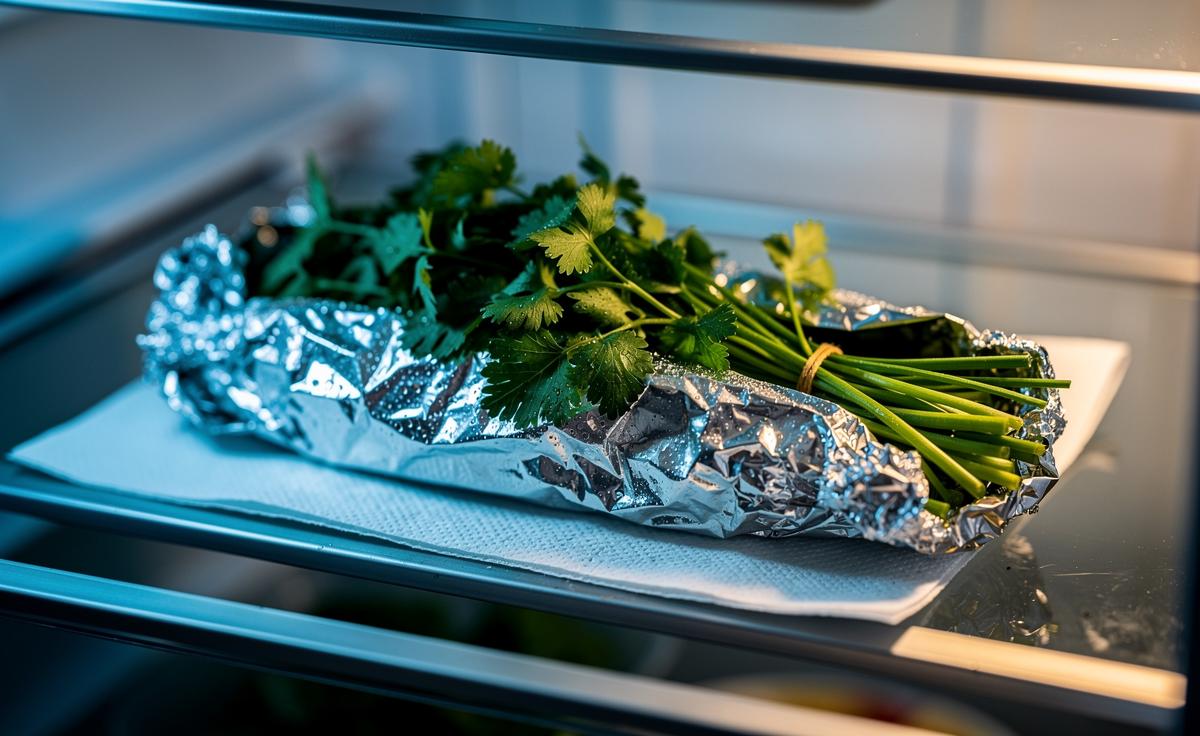
Success starts with prep. Rinse herbs quickly, then dry thoroughly—shake, spin, and pat until no visible droplets remain. For soft herbs (parsley, coriander, dill), lay a sheet of unbleached paper towel over a piece of foil. Spread the leaves in a thin layer, stems aligned, then roll into a loose cigar. Fold the ends under to create a gentle seal and label with the date. For woody herbs (rosemary, thyme, sage), skip the paper layer; they prefer slightly less humidity. Never wrap wet leaves tightly in foil—the trapped water accelerates decay.
Storage matters as much as wrapping. Place the foil roll in the crisper drawer, where temperature and humidity are steadier. Avoid parking next to high-ethylene fruits (apples, pears) and pungent items. Basil is the outlier: it hates the cold. Treat basil like cut flowers—stems in a jar of water at room temperature, loosely tented with a breathable bag. Top up the jar, change the water every two days, and keep it off a sunny sill. For everything else, check the foil roll every three to four days; if condensation forms, open, briefly air-dry, and reseal.
- Dry completely after washing.
- Layer with paper for soft herbs; foil only for woody herbs.
- Seal lightly—snug, not vacuum-tight.
- Label with date; store in the crisper.
- Basil exception: jar-at-room-temp, not foil in the fridge.
Pros and Cons Compared to Other Storage Methods
Different herbs prefer different conditions, and kitchens vary. My testing suggests the foil method shines when you need low fuss, margin for moisture control, and protection from fridge drafts. It’s especially helpful for coriander, parsley, dill, chives, and mint. Bouquet-style storage (stems in water) excels for leafy bunches you consume quickly; paper-towel-in-bag works well but can trap too much moisture if overpacked. Foil is a strong all-rounder because it balances humidity without smothering the leaves, provided you begin with dry herbs and a light seal.
| Method | Typical Shelf-Life | Best For | Pros | Cons |
|---|---|---|---|---|
| Foil wrap (+ paper for soft herbs) | 7–14 days (varies by herb) | Parsley, coriander, dill, chives, mint | Good humidity control; blocks light; compact | Not ideal for basil; needs herbs dry at start |
| Paper towel + bag | 5–10 days | Most soft herbs | Breathable; easy to see contents | Can get soggy; bruises if overstuffed |
| Bouquet in water | 3–7 days fridge; basil room temp 3–5 days | Leafy bunches; basil at room temp | Revives limp stems; simple | Spills; needs water changes; light exposure |
| Clamshell (store-bought) | 3–6 days | Pre-packed mixed herbs | Convenient; stackable | Prone to condensation; limited airflow |
| Freezing (chopped or whole) | Months | Hardy flavours: parsley, dill, chives | Zero waste; ready to cook | Texture lost; not for garnish |
- Pros of foil: Stable microclimate, bruise protection, longer window.
- Cons of foil: Not basil-friendly, requires dryness discipline, creates material waste unless reused/recycled.
Case Study: A Week-by-Week Shelf-Life Test in a London Flat
In a recent two-week test, I bought three bunches each of parsley, coriander, and chives from a South London greengrocer. One set went into foil (soft herbs cushioned with paper), one into paper-towel-and-bag, and one bouquet-style in water (fridge for parsley/chives; room temp for coriander, which sulks in very cold air). The flat runs cool—about 6°C in the fridge crisper. By day six, the foil bundles were visually perky, with stems snappy and leaves aromatic; the bagged herbs were serviceable but slightly damp at the edges. The bouquets needed trimming and water changes to stave off slime.
At day ten, foil-wrapped parsley remained garnish-ready; coriander showed a whisper of yellowing at the tips but was still full-flavoured; chives were firm. Paper-bagged equivalents were acceptable in cooking but not photogenic; the bouquets were shedding more stems to mush. By day fourteen, foil-wrapped parsley was still usable in tabbouleh, coriander was stew-only, and chives sliced cleanly for omelettes. This is a single-kitchen result, of course—your fridge and herb quality will sway outcomes—but the pattern is repeatable: foil extends the “confidently fresh” window by several days, sometimes a full week.
- Day 6: Foil best for looks and snap; others edible but less crisp.
- Day 10: Foil still garnish-grade for parsley/chives; coriander slightly tired.
- Day 14: Foil mostly cooking-grade; others largely spent.
Why Foil Isn’t Always Better
Foil is powerful, not perfect. Basil bruises and blackens in the cold; give it water and room temperature instead. Very tender leaves (tarragon, chervil) can mat if wrapped too tightly; they prefer extra padding or the paper-towel-in-bag approach. If you live with a very humid fridge, foil may trap too much moisture—open, vent for 30 minutes, then reseal more loosely. The hack fails fastest when leaves go in damp, are crammed tightly, or share space with ethylene-heavy fruit. Keep foil rolls away from apples and pears, and don’t overfill.
There’s also a sustainability angle. Aluminium is energy-intensive, so reuse sheets for multiple cycles and recycle when spent—many UK kerbside schemes accept clean foil if it’s scrunched into a ball. If you’d rather skip metal altogether, try a reusable beeswax wrap or a lidded container lined with dry paper. Think of foil as a targeted tool: excellent for extending life when you need it, not a default for every herb and every week. The right method for the herb and the moment is the truly waste-cutting choice.
- Don’t chill basil in foil; use a jar at room temp.
- Don’t wrap wet leaves; dry first, then cushion.
- Don’t neglect recycling; clean and scrunch foil for kerbside where accepted.
From midweek meals to Sunday roasts, bright herbs are a small luxury that lift everything they touch. The foil wrap method won’t rewrite the laws of botany, but it does stack them in your favour—controlling humidity, softening airflow, and shielding delicate leaves from fridge fatigue. Used wisely, it can halve your wilt-related waste and keep flavour on standby for days longer. Start with dryness, seal with a light hand, and store with intention. Which herb do you struggle to keep perky—and what tweak will you try first to give it a longer, crisper life?
Did you like it?4.4/5 (28)