In a nutshell
- 🧪 Avocado oil seals lifted cuticles while honey (a potent humectant) draws water in— a “pull-and-protect” synergy that smooths frizz overnight and boosts softness.
- 🛏️ Method: whisk honey with warm water, blend in oil, apply to damp mids-to-ends, cover with silk/bonnet for 6–8 hours, then rinse cool and cleanse with a gentle sulfate-free wash for residue-free shine.
- 🌦️ Ratios and porosity: use 1:1 honey:oil in dry indoor heat, 3:2 in humidity; for low-porosity hair apply less + mild heat, for high-porosity add a ceramide-rich drop; fine hair can lighten with aloe.
- ⚖️ Pros vs. Cons: fast, budget-friendly frizz control and improved slip, but can feel heavy if overapplied; avoid roots for volume, patch-test, and add occasional clarifying if buildup appears.
- 📈 Results: reduced halo frizz, quicker blow-dry, defined coils across textures—weekly use maintains overnight moisture retention without greasiness when amounts and ratios are tailored.
Frizz isn’t just a bad-hair-day cliché; it’s a moisture management problem. When the cuticle lifts in search of humidity, strands swell, roughen, and misbehave. A simple, kitchen-shelf remedy—an avocado oil and honey hair mask—can rebalance that exchange overnight. Avocado oil’s lipids slip between lifted cuticles to seal, while honey, a natural humectant, draws and holds water where your hair needs it most. Applied before bed, the blend gives hours of contact time for moisture to seep in and stay put. Here’s the science, the method, and the small adjustments that make a big difference come morning.
Why Avocado Oil and Honey Work Together
There’s a reason this duo became a beauty-desk staple. Avocado oil is rich in oleic and palmitic acids, lipids that behave like a soft sealant, coating lifted cuticles so your hair loses less water overnight. Honey contributes fructose and glucose with hydroxyl groups that bind water—classic humectant behaviour—while its natural acids keep the mask slightly acidic, nudging the cuticle flatter. This pairing creates a moisture gradient: honey attracts water into the fibre; oil reduces its escape.
Think of it as a two-part system: “pull-and-protect.” Honey “pulls” moisture towards the cortex, and avocado oil “protects” by slowing transepidermal water loss. The result is softer, lower-friction strands and dramatically less halo frizz.
- For high-porosity hair: the oil fills gaps; honey rehydrates fast.
- For low-porosity hair: use a lighter layer; gentle heat opens pathways.
- For fine hair: mix with aloe gel to reduce weight.
Overnight timing matters because moisture migration takes hours, and sleep provides the stillness and warmth that help lipids settle and humectants work steadily without flash-drying.
The Overnight Method: Step-by-Step and Science
Keep the recipe simple and repeatable. Measure, emulsify, and apply to damp—not sopping—hair. Dampness provides initial water for honey to bind, and a touch of heat (from a wrap or bonnet) improves lipid mobility so avocado oil can spread uniformly.
| Hair Length | Avocado Oil | Honey | Time |
|---|---|---|---|
| Short | 1 tsp (5 ml) | 1 tsp (5 ml) | 6–8 hours |
| Medium | 2 tsp (10 ml) | 2 tsp (10 ml) | 6–8 hours |
| Long/Thick | 1 tbsp (15 ml) | 1 tbsp (15 ml) | 8 hours |
- Whisk honey with a few drops of warm water until syrupy; stir in oil for a glossy blend.
- Apply mids-to-ends first; smooth remaining product towards roots if dry-prone.
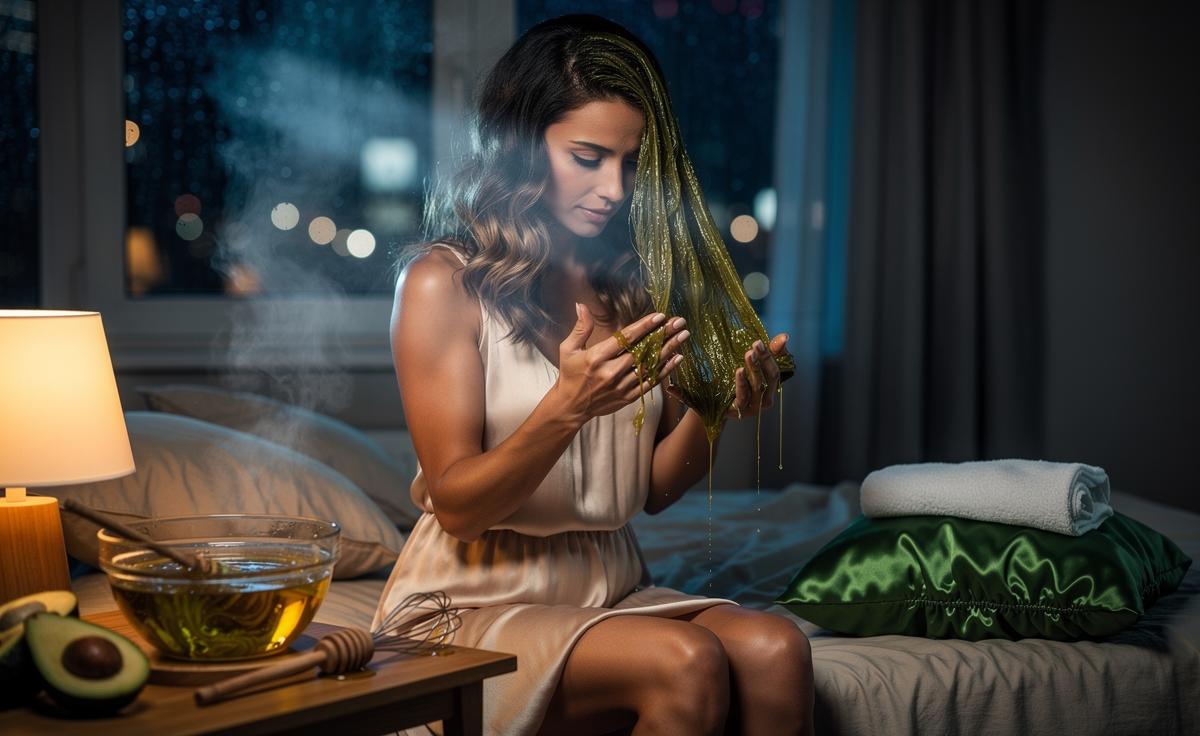
- Twist hair loosely and cover with a silk scarf or bonnet; place a towel over the pillow.
Rinse with lukewarm water in the morning, then co-wash or use a gentle, sulfate-free shampoo. Finish with a light conditioner. The aim is residue-free softness, not slickness. A cool final rinse helps the cuticle lie flatter, locking in the night’s work.
Pros vs. Cons: What Your Hair Gains—and What to Watch
This mask performs because it’s targeted. You’re not smothering strands; you’re feeding them water and sealing it in. The payoff, especially in the UK’s changeable climate, is consistent: less frizz, more slip, and a touchable sheen without crunch.
- Pros:
- Fast results in one night; improves again with weekly use.
- Budget-friendly, minimal ingredients, fragrance-optional.
- Scalp-friendly when used sparingly; low pH helps cuticle cohesion.
- Cons:
- Can feel heavy on very fine or low-porosity hair if overapplied.
- Sticky if not emulsified properly; residue if you skip a light cleanse.
- Humidity swings may require tweaking the honey ratio.
Patch-test on skin and trial a small section first. If you’re prone to buildup, add a clarifying wash (once every two to four weeks). For volume lovers, keep the mask away from the first two centimetres at the root and use a lighter oil finish, such as argan, the next day.
Why More Honey Isn’t Always Better
Honey is a star humectant, but climate matters. In low-humidity rooms—think centrally heated flats in winter—excess humectant can pull water out of the hair rather than into it. That’s why you’ll see frizz spike on dry, heated days if the recipe is honey-heavy. The fix is simple: balance with oil and add external moisture.
- Use a 1:1 ratio of honey to oil in dry conditions; go up to 3:2 in humid weather.
- Mist hair lightly with water or a rosewater spritz before application to “feed” the humectant.
- Swap some honey for aloe vera gel if your hair is fine or easily weighed down.
Avocado oil also has limits. On low-porosity hair, too much can sit on top and dull. Apply less and add gentle heat for five minutes to nudge absorption. On high-porosity hair, you may benefit from a few drops of ceramide-rich oil (wheatgerm) in the blend to help patch gaps. The north star: moisture in, minimal escape, zero residue.
Case Study and Real-World Results
On a rainy Tuesday in Manchester, I tested this mask on my wavy, medium-porosity hair after a day of commuter drizzle. Using 2 tsp honey and 2 tsp oil, I wrapped my hair and slept. By morning, the pesky halo that frames my fringe had melted into soft S-waves. Blow-dry time fell by five minutes, and I skipped my usual anti-frizz serum. The finish felt clean, not coated.
On a friend’s coily 4A hair, we bumped the ratio to 1 tbsp each and added five minutes of low heat before bed. The result: tighter, defined coils with noticeably less lift at the crown. For a fine-haired colleague, we halved the amounts and added aloe; volume held, frizz dropped. Across textures, the pattern repeated—when the mix matched porosity and climate, overnight moisture retention translated to calmer mornings.
- Weekly use is a sweet spot; more can be overkill unless you heat-style frequently.
- Rotate in a light protein treatment fortnightly if hair feels overly soft.
Tame frizz without a chem-lab routine: a bowl, a whisk, avocado oil, and honey are enough to change tomorrow morning’s mirror. Start with small amounts, set the ratio to your climate, and let time do the heavy lifting while you sleep. Moisture doesn’t need to be forced; it needs a path and a guardrail. What tweaks—heat, ratios, or add-ins—will you test first to make this overnight mask your own?
Did you like it?4.5/5 (21)